Samskara novel summary is an essential exploration of tradition, morality, and personal transformation in Indian literature. Written by U. R. Ananthamurthy, this novel is considered a masterpiece of modern fiction and a powerful critique of social customs. First published in 1965 in Kannada and later translated into English by A. K. Ramanujan, Samskara stands out as a thoughtful story that blends spiritual questions with everyday human struggles. You can also access saisuthe novels pdf free download to read this classic novel conveniently.
What is Samskara Novel?
The book tells a story that begins in a quiet Brahmin village in rural Karnataka. At the heart of the plot is the question of how a community should respond when a long‑standing member dies without following the rituals expected of his caste. This forced confrontation exposes deeper questions about caste, the role of religion, and the true nature of purity. The samskara novel summary reveals how characters face ethical conflicts that reflect broader societal issues.
Samskara is more than just a story about death and rites. It presents characters who each represent a specific moral position, forcing readers to consider what it means to be right or wrong. The narrative uses events and symbols to show how internal beliefs clash with outward behavior and social expectations.
The Setting and Cultural Background
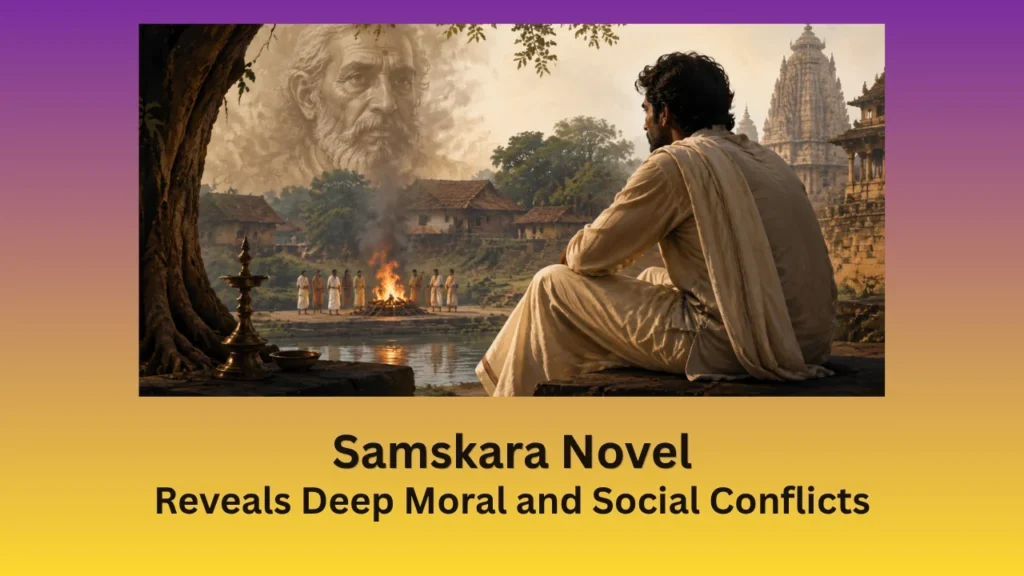
The events of the samskara novel summary take place in the fictional village of Durvasapura, where Brahmin families have lived for generations. This village is steeped in caste traditions and strict religious practice. The Brahmins here are expected to follow rules that govern everything from daily rituals to funeral practices.
The word samskara itself refers to a rite of passage or purification ritual in Hindu tradition. It carries multiple meanings such as refinement, consecration, and purification, all of which are relevant to both the plot and the inner transformations of the characters.
This cultural backdrop is important for understanding the moral dilemmas faced by the characters. The novel uses the village setting to highlight rigid rules that govern life and death and to show how tradition can sometimes lead to conflict instead of clarity.
Main Characters and Their Roles
In Samskara novel summary, the novel’s characters reveal different facets of moral and social life. They represent the collective tensions between purity and impurity, tradition and personal freedom. The key character is Praneshacharya, a devout Brahmin scholar deeply committed to religious ritual and spiritual discipline. He has spent his life in service to religion and devotion.
Another central figure is Naranappa, a rebellious Brahmin who rejects the strict rules of his caste. He chooses to live a life that the village elders see as immoral. Naranappa eats forbidden food, associates with people from outside his caste, drinks alcohol, and openly mocks tradition. When he dies suddenly, his community must decide whether his body is worthy of traditional funeral rites.
A lesser-known but important character is Chandri, Naranappa’s companion. Her presence complicates the situation by bringing the question of money and responsibility into the ethical debate. Other Brahmins in the village also reveal their own inner contradictions as greed, hypocrisy, and fear shape their actions.
Plot Progression and Central Conflict
The samskara novel summary begins with the death of Naranappa, whose unconventional life angers and confuses the villagers. When news of his death spreads, all the local Brahmins gather to decide what to do with the body. The central question is whether someone who rejected sacred traditions during life should receive proper rites in death.
The Brahmins turn to Praneshacharya, the most respected member of the community, for guidance. But he finds no clear answer in religious texts. This failure rocks his confidence in himself and in the very traditions he has lived by. He goes from scholar to seeker, questioning not only textual scripture but his own beliefs.
Praneshacharya’s Spiritual Crisis and Community Dilemmas
As the situation worsens — with the hot climate and the body waiting to be cremated — the community experiences fear and anxiety. Traditional purity laws prevent them from eating until the rites are done. Their hunger becomes a symbol of moral hunger, revealing that external rituals alone cannot resolve deep ethical wounds.
Praneshacharya, desperate for a resolution, seeks divine guidance in prayer and enters a spiritual journey that echoes the tale’s theme of self-discovery. In his confusion, he even abandons his strict self-control and behaves in ways that contradict his own teachings. These events expose the inner contradictions that each character carries.
Themes and Symbolism
The samskara novel summary highlights themes that give the novel its lasting power. One central theme is the conflict between tradition and individuality. The story asks if standing by tradition is always right or if personal morality can challenge social rules. The character of Praneshacharya shows how rigid belief can crumble when faced with real human problems.
Another major theme is the nature of purity and impurity. In the novel, physical purity is tied to ritual rules, but spiritual purity becomes a deeper question about a person’s intent and inner life. The villagers label Naranappa as impure because he rejects rules. But the story forces readers to ask whether outward ritual alone can define purity.
Class and caste also play a strong role. Lower-status characters are treated unfairly, and this unequal treatment reflects the larger hierarchy of traditional society. The novel doesn’t just criticize one person but questions the system that labels some lives as lesser than others.
Legacy and Literary Importance
Samskara novel summary cannot be complete without acknowledging its place in literature. The book has been widely studied in universities and is considered a defining work in Indian literature because of its bold questioning of social norms. Its themes still resonate with readers decades after publication.
It was also adapted into a film in 1970, which received critical acclaim and helped the story reach a wider audience. The novel’s impact comes from its ability to provoke thought instead of offering simple answers. It remains relevant because it pushes readers to reflect on their own beliefs and cultural assumptions.
Moral Questions and Ethical Dilemmas
The samskara novel summary presents readers with deep moral questions that remain relevant today. The story challenges the idea that tradition alone can define what is right or wrong. Characters in the novel must navigate situations where ethical decisions clash with social rules. This tension forces both characters and readers to reflect on the meaning of duty and conscience. The moral dilemmas in the story make it a timeless reflection on human nature.
The Role of Spirituality
Spirituality plays a central role in the samskara novel summary. The protagonist, Praneshacharya, seeks guidance through prayer and reflection when faced with Naranappa’s death. His journey illustrates how spiritual inquiry can reveal the complexity of life beyond mere rituals. The novel emphasizes that true spirituality involves self-awareness and moral responsibility. By showing Praneshacharya’s inner struggle, the story highlights the connection between personal belief and community ethics.
Lessons for Modern Readers
The samskara novel summary offers lessons that resonate with contemporary society. It reminds readers to question rigid social norms and to balance personal morality with cultural expectations. The novel encourages critical thinking about religion, ethics, and social responsibility. By exploring the conflicts of its characters, it shows that true understanding comes from reflection and empathy. These lessons make the story not only a literary masterpiece but also a guide for personal growth.
Conclusion
The samskara novel summary reveals a story rooted in deep ethical questions. Through its characters, plot, and themes, the novel challenges readers to think about tradition, morality, and what it truly means to live a life of purpose. Samskara goes beyond a simple tale about funeral rites — it is a profound exploration of the human condition, spiritual uncertainty, and the clash between rigid social rules and personal conscience.