
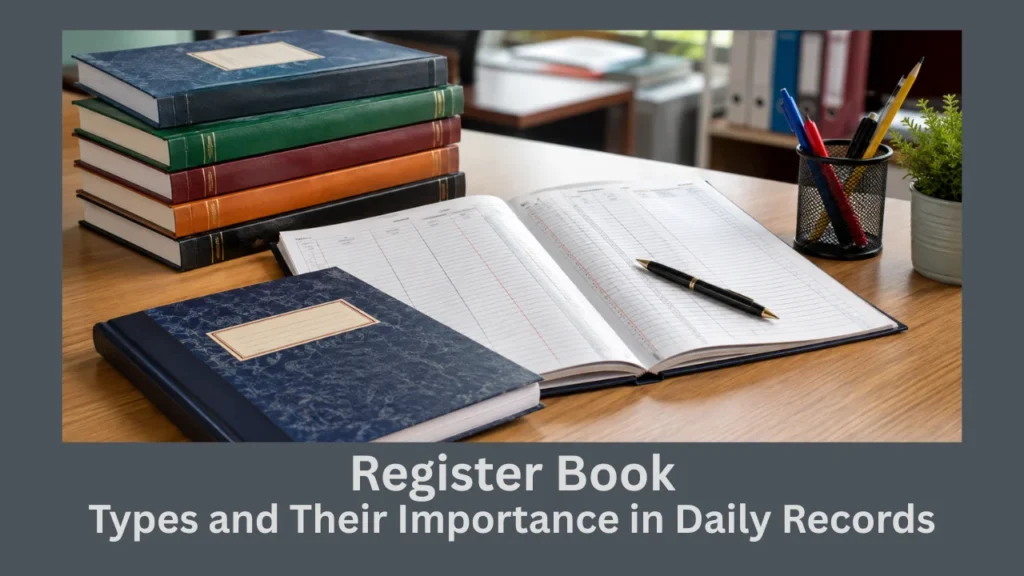
A register book is an important tool for keeping information organized and easy to check. Schools, offices, shops, hospitals, and government departments across India use registers for daily records. People searching for class 2 english book question answer pdf may also come across school registers while exploring educational records and resources.
Registers help people record names, dates, numbers, payments, attendance, stock, and other important details. They provide a clear history of activities and make old information easier to find. Good record keeping also improves accuracy, responsibility, and management.
What Is a Register Book?
A register book is a physical or digital record used to enter information in a fixed and organized format. It usually contains rows and columns for details such as names, dates, serial numbers, signatures, quantities, and remarks. Each entry follows a planned system so users can find information quickly.
A register differs from an ordinary notebook because it normally serves a specific record-keeping purpose. An office may use it for visitors, while a school may use it for student attendance. Businesses can also maintain registers for sales, stock, purchases, employees, and assets.
| Feature | Details |
|---|---|
| Main purpose | Organized record keeping |
| Common format | Rows and columns |
| Users | Schools, offices, shops and institutions |
| Common details | Names, dates, numbers and signatures |
| Forms | Physical and digital |
| Main benefit | Easy tracking and verification |
Importance of Register Books in India
India has a large network of schools, companies, hospitals, shops, factories, and public offices. These organizations handle large amounts of information every day. A well-maintained register book provides a simple system for keeping these details in one organized place.
Registers can also support audits, inspections, internal checks, and administrative work. They show when an activity happened and may identify the person who recorded or approved it. Accurate registers can reduce confusion and make routine management easier.
Common Types of Register Books
| Type | Main Purpose |
|---|---|
| Attendance Register | Records daily attendance |
| Admission Register | Stores student admission details |
| Visitor Register | Records people entering a place |
| Stock Register | Tracks goods received and issued |
| Library Register | Maintains book records |
| Employee Register | Stores staff information |
| Fee Register | Records fees and payments |
| Sales Register | Records sales information |
| Purchase Register | Records purchases |
| Dispatch Register | Tracks outgoing documents |
| Inward Register | Tracks received documents |
| Asset Register | Records equipment and assets |
Register Books Used in Indian Schools
Schools are among the most common users of registers in India. Teachers and administrators use them to manage student attendance, admissions, fees, library activities, examinations, and staff information. These records make it easier for schools to review student and administrative information.
The attendance register is especially common because schools need to monitor student presence regularly. Admission records can preserve important student details for a much longer period. Schools may now use software for some records, but traditional paper registers remain useful in many institutions.
Attendance Register
An attendance register book records whether a student or employee is present, absent, or on leave. Schools commonly organize attendance by class, section, student name, roll number, and date. Offices can follow a similar system for employees.
Accurate attendance information helps institutions monitor participation and identify repeated absences. Administrators can also use these records when preparing reports. Digital attendance systems are becoming more common, but physical records are still widely understood and easy to maintain.
Admission Register
An admission register stores important information about students when they join an educational institution. It may include the student’s name, admission number, date of admission, date of birth, class, and guardian details. The exact information depends on the institution and applicable requirements.
Schools treat admission information carefully because they may need it years after a student leaves. These records can support certificates and other administrative processes. Clear and accurate entries are important because mistakes can create problems later.
Visitor Register for Offices and Buildings
Visitor registers are common at offices, factories, schools, hospitals, apartments, and other controlled locations. Security staff usually ask visitors to provide basic information before entering. The information may include the visitor’s name, arrival time, purpose, person being visited, and departure time.
Organizations use these records to understand who entered their premises and when the visit happened. Some locations have replaced paper records with digital visitor systems. However, a physical visitor register remains a simple option that does not require special software or equipment.
Stock Register for Shops and Businesses
| Stock Field | Purpose |
|---|---|
| Date | Shows when the transaction happened |
| Item Name | Identifies the product |
| Opening Stock | Shows starting quantity |
| Stock Received | Records incoming quantity |
| Stock Issued | Records outgoing quantity |
| Balance | Shows remaining stock |
| Remarks | Adds extra information |
Sales and Purchase Registers
Businesses use sales registers to record transactions involving goods or services sold to customers. Entries may include the transaction date, invoice details, customer information, value, and other required data. This creates an organized record of sales activity.
A purchase register works in a similar way but focuses on purchases made by the business. It can contain supplier details, invoice information, dates, and amounts. Companies increasingly use accounting software, although the basic purpose of structured record keeping remains the same.
Inward and Dispatch Registers
Many Indian offices use inward and dispatch records to manage documents and official communication. An inward register records letters, applications, parcels, or documents received by an organization. Employees can assign each item a serial number and record the date of receipt.
A dispatch register records documents and parcels sent from the organization. It can include the receiver’s name, address, dispatch date, reference number, and delivery method. These records help staff trace documents when someone needs information later.
Register Books Under the Registration Act 1908
| Official Book | General Purpose |
|---|---|
| Book 1 | Certain documents relating to immovable property |
| Book 2 | Reasons for refusal to register |
| Book 3 | Wills and authorities to adopt |
| Book 4 | Miscellaneous register |
Main Features of a Good Register Book
A good register book should have a clear layout that matches its intended purpose. Printed headings and properly arranged columns make entries easier to understand. Page numbers and serial numbers can also help users locate information quickly.
The paper and binding should suit the expected period of use. Registers that receive daily entries may need stronger covers and secure binding. Clear handwriting, correct dates, and complete entries are equally important for maintaining reliable records.
Physical Register vs Digital Register
| Factor | Physical Register | Digital Register |
|---|---|---|
| Internet needed | No | Sometimes |
| Physical storage | Required | Minimal |
| Searching | Slower | Faster |
| Initial setup | Simple | May require software |
| Backup | Physical copies | Digital backups |
| Best suited for | Simple records | Large data volumes |
How to Maintain a Register Properly
Users should enter information clearly and consistently so other people can understand the records later. Each entry should contain the required date, number, name, or other details. Staff should avoid leaving unclear information that could cause confusion during future checks.
Organizations should also store completed registers in a secure and suitable location. Sensitive information may require controlled access because not every employee should see it. Regular checks can help identify missing entries, mistakes, or damaged records before they become serious problems.
Benefits of Organized Record Keeping
Organized records help people understand past activities without relying only on memory. Managers can check transactions, attendance, visitors, inventory, or documents whenever they need the information. This can save time and improve everyday decision-making.
Proper records also improve accountability because entries create a history of actions and events. Schools can check student information, while businesses can examine previous transactions and stock movement. Reliable records support better administration and smoother daily operations.
Conclusion
A register book remains a useful record-keeping tool across India, even as organizations move toward digital systems. Schools use registers for attendance and admissions, while offices use them for visitors, employees, documents, and assets. Businesses also depend on structured records for stock, sales, purchases, and other activities.
The format may change from paper to software, but the basic purpose remains the same. A good register keeps important information organized, accurate, accessible, and easier to verify. Proper maintenance can make it a valuable source of information for years.