
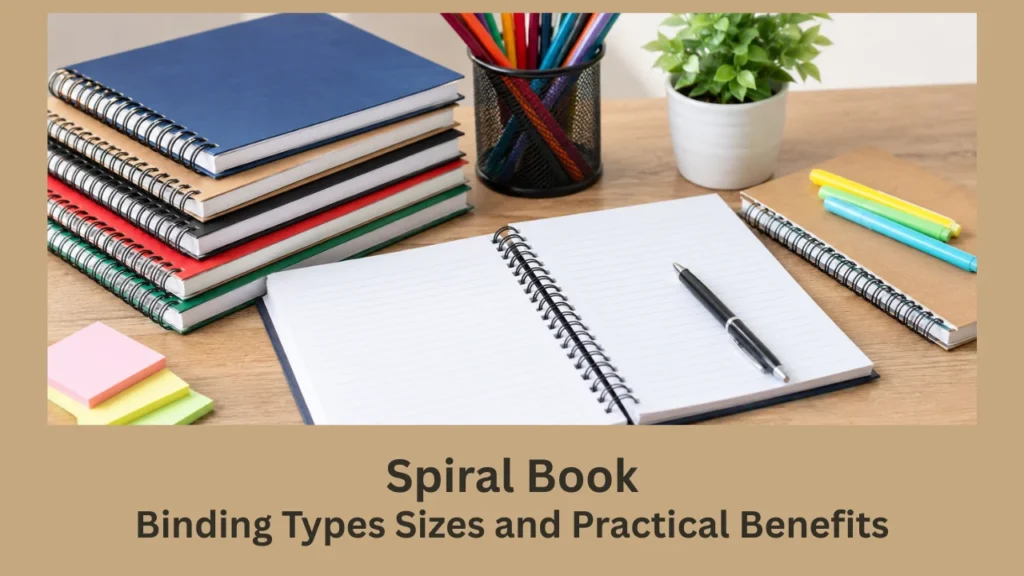
A spiral book is a practical type of notebook that uses a wire or plastic coil to hold its pages together. It is widely used by students, teachers, office workers, artists, and businesses across India. People who enjoy reading online content such as abo desire novel may use notebooks to record ideas or important details. Spiral-bound notebooks are especially useful because they open flat and make writing comfortable.
This binding style works well for school notes, projects, office records, planners, manuals, and creative work. Different sizes, paper types, covers, and binding materials make these notebooks suitable for many needs.
What Is a Spiral Book?
A spiral book contains pages with small holes punched along one side. A continuous coil or shaped wire passes through these holes and keeps all the pages securely connected. The binding allows users to turn pages smoothly without putting much pressure on the spine. Many notebooks can also fold back on themselves, which saves desk space while writing.
Unlike a traditional glued notebook, spiral binding does not have a fixed spine that prevents pages from opening fully. This simple design is one reason it remains popular in schools and offices.
How Spiral Binding Works
| Binding Part | Main Purpose |
|---|---|
| Paper pages | Provide space for writing or printing |
| Punched holes | Hold the binding coil |
| Metal wire | Provides strong and neat binding |
| Plastic coil | Provides flexible binding |
| Front cover | Protects the first page |
| Back cover | Supports and protects the notebook |
Why Spiral Notebooks Are Popular in India
India has a large student population, so notebooks remain important for daily education. Students use them for lectures, homework, practical work, revision, and exam preparation. A spiral book is also convenient for college projects because it can hold printed pages in an organized form. Local printing shops often provide spiral binding for assignments, reports, presentations, and project files.
Businesses also use spiral-bound material for training documents, product information, presentations, and internal records. The format provides a professional look while keeping the pages easy to access.
Common Sizes Available in India
| Size | Approximate Dimensions | Common Use |
|---|---|---|
| A5 | 148 × 210 mm | Personal notes and diaries |
| B5 | 176 × 250 mm | School and college notes |
| A4 | 210 × 297 mm | Assignments and office documents |
| A3 | 297 × 420 mm | Drawings and large presentations |
Types of Spiral Binding
Not every spiral notebook uses the same binding material. Manufacturers choose different systems depending on cost, appearance, durability, and intended use. Plastic coil binding uses a flexible plastic spiral that passes through holes in the pages. It works well for manuals, educational documents, and everyday notebooks.
Metal spiral binding provides a stronger and more polished appearance. Some premium notebooks and professional documents use metal because it can look cleaner and more formal. Wire-O or twin-loop binding uses pairs of wire loops instead of one traditional continuous spiral. It is often chosen for calendars, presentations, diaries, planners, and premium notebooks.
Paper Used Inside Spiral Notebooks
| Paper Style | Suitable Purpose |
|---|---|
| Ruled | Class notes and everyday writing |
| Plain | Sketching and creative work |
| Grid | Mathematics, graphs and technical work |
| Dotted | Planning and bullet journals |
| Printed format | Records, training and business use |
Main Benefits of Spiral Binding
The biggest advantage of spiral binding is its flexibility. Users can open the notebook flat, making it easier to write near the inner edge of a page. A spiral book can often fold completely back so that only one page is visible. This feature helps students when they have limited desk space in classrooms, libraries, or study areas.
Spiral binding also makes page turning easy. Users do not need to force the book open or hold the pages down while taking notes. Another benefit is customization. Printing companies can create custom covers, internal layouts, page counts, paper styles, and branding for schools or businesses.
Spiral Notebook vs Regular Notebook
| Feature | Spiral Notebook | Regular Notebook |
|---|---|---|
| Binding | Coil or wire | Glue, stitching or staples |
| Opens flat | Usually yes | Depends on construction |
| Can fold backward | Often yes | Usually no |
| Easy page turning | Very easy | Varies |
| Writing comfort | High | Depends on binding |
| Best for | Notes and active use | Writing and general use |
Uses for Students
Students are among the biggest users of spiral notebooks in India. They can keep separate notebooks for mathematics, science, English, computer studies, and other subjects. College students may use a spiral book for lectures, practical records, research notes, assignments, and project preparation. The flexible design makes it easier to write while attending classes.
Students can also divide one notebook into different sections. Subject notebooks with separators can reduce the need to carry several separate books.
Uses in Offices and Businesses
Spiral-bound material is not limited to schools. Offices can use it for meeting notes, employee training, reports, presentations, product catalogs, and internal manuals. Companies may print their logo and contact information on customized notebook covers. This turns an ordinary notebook into useful branded stationery for employees, clients, or events.
Training centers can also use spiral binding for course material. Pages remain organized while learners can easily keep the manual open during lessons.
Uses for Artists and Designers
Artists often need a notebook that stays open without being held down. Spiral binding provides this flexibility and can make drawing more comfortable. Sketchbooks may contain plain, textured, or thicker paper depending on their purpose. Designers can use them for rough concepts, diagrams, layouts, and creative planning.
The ability to fold the cover backward is useful when drawing outdoors or in small spaces. However, artists should choose paper that matches their pencils, pens, markers, or other materials.
Covers and Notebook Protection
A spiral book may have a soft paper cover, thick card cover, laminated cover, or plastic cover. The right choice depends on how often the notebook will be carried and used. A strong cover protects pages from bending, dust, and everyday handling. Students who carry notebooks in backpacks may benefit from thicker front and back covers.
Businesses often choose printed or laminated covers because they offer a cleaner presentation. Custom covers can include a company name, subject title, design, or other useful information.
Possible Disadvantages
Spiral binding also has some limitations. Metal coils can bend if users place heavy objects on the notebook or handle it roughly. A damaged coil may make page turning difficult. Plastic coils can avoid some bending issues, but their durability depends on material quality.
The wire can also feel uncomfortable when someone writes close to the binding. Left-handed and right-handed users may notice this issue on different sides of the notebook. Loose sheets are not easy to add unless the notebook uses a binding system designed for page replacement. Users should consider these points before selecting a notebook.
How to Choose the Right Spiral Notebook
Start by deciding how you plan to use the notebook. Students may prefer ruled B5 or A4 pages, while office users may choose A4 for reports and professional documents. Check the paper quality if you regularly use ink or markers. Thin paper may allow ink to show through, while thicker paper can provide a better writing experience.
Also examine the coil, cover, and number of pages. Strong binding and a durable cover can help a notebook survive regular daily use. For travel and quick notes, choose a compact A5 model. For detailed classwork, assignments, diagrams, or business documents, A4 may provide more useful space.
Conclusion
A spiral book is a simple but useful stationery product for education, business, planning, and creative work. Its coil binding lets pages turn smoothly, lie flat, and often fold completely behind the notebook.
In India, these notebooks are useful for school notes, college projects, office documents, manuals, sketches, and personal planning. Choosing the right size, paper, cover, and binding quality can make the notebook more comfortable and durable.