
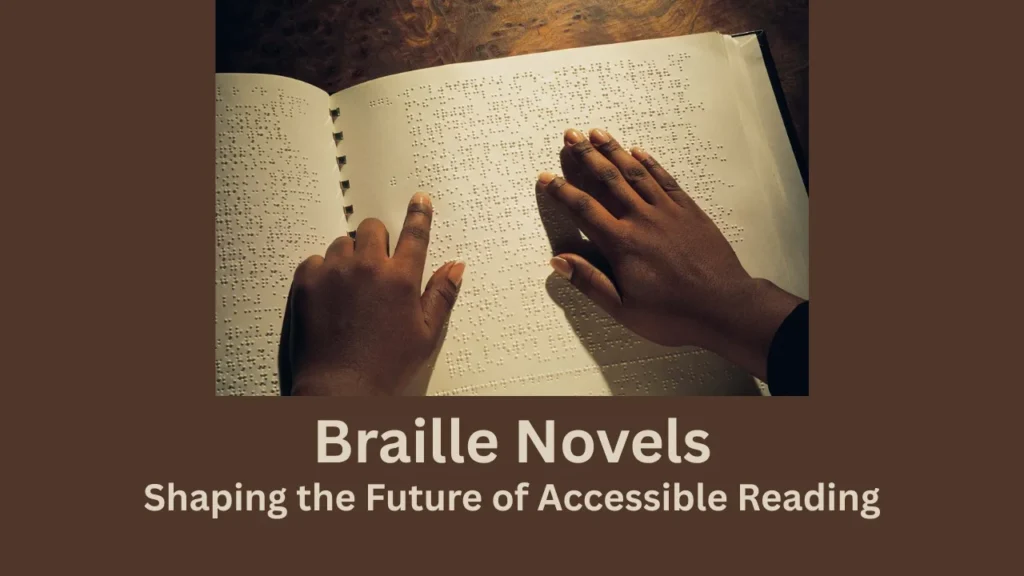
Kambi novel shows how stories can reach readers in different formats, and one of the most powerful formats is braille novels. These books help people who cannot see to read using their sense of touch instead of their eyes. They allow readers to connect with stories in a meaningful way. This makes reading more inclusive and accessible. It also gives people the chance to enjoy literature independently.
In today’s modern world, many people depend on digital tools and audio formats for reading. However, Braille still plays a very important role in learning and literacy. It helps users understand spelling, grammar, and sentence structure clearly. This article explains everything about braille novels in a simple and easy way. It also shows why they still matter today.
What Are Braille Novels
Braille novels are full-length books written using raised dots instead of printed text. Readers use their fingers to feel these dots and understand the content. Each pattern of dots represents a letter, number, or symbol. This system allows blind readers to read just like others. It creates equal access to books and knowledge.
These books give readers the ability to enjoy stories without depending on others. They can read at their own pace and understand every word clearly. Braille novels provide independence and confidence to visually impaired people. This is important for personal and educational growth. It helps them become more self-reliant in daily life.
Understanding the Braille System
Braille is based on a six-dot system arranged in two columns. These dots form small cells that represent different characters. Each combination creates a unique meaning. This makes the system simple but powerful. Readers learn these patterns step by step.
Braille is not a language but a writing system used across many languages. It works with English, Urdu, Arabic, and more. With practice, readers improve their speed and accuracy. This helps them read long texts easily. Over time, Braille becomes natural to them.
History of Braille and Its Development
Louis Braille invented this system in 1824 when he was still a teenager. He wanted to help blind people read and write more easily. His idea changed the way visually impaired people learn. It replaced older and less useful methods.
At first, people did not accept Braille quickly. Later, schools and libraries started using it widely. Soon, full books and braille novels became available. This helped blind readers enjoy literature. Today, Braille is used all over the world.
How Braille Novels Are Made
The process of creating braille novels starts with converting printed text into Braille code. Experts or computer software handle this step carefully. Accuracy is very important in this stage. Even a small mistake can change the meaning.
After conversion, special machines emboss raised dots onto thick paper. These pages are then arranged and bound into volumes. This process ensures high-quality reading material for users. It helps maintain clarity and readability.
Why Braille Novels Are Larger Than Printed Books
Braille books are larger because each letter uses a full dot cell. This takes more space compared to printed text. Fewer words fit on one page. Lines are also spaced wider.
A single printed novel can turn into multiple volumes in Braille. Braille novels often become bulky and heavy, making them harder to carry. This is one of the main challenges readers face.
Types of Braille Used in Novels
There are different types of Braille used for reading materials. Grade 1 Braille shows each letter separately. It is mainly used for beginners. It helps them learn the basics clearly.
Grade 2 Braille uses contractions to save space and improve speed. Most braille novels use this format because it is efficient. It allows readers to go through text faster. This makes reading more comfortable.
Who Uses Braille Novels
People of all ages use Braille depending on their needs. Some individuals are blind from birth. Others lose their sight later in life. Both groups benefit from learning Braille.
Students, workers, and older adults all use braille novels for reading. Braille supports independence and confidence in daily life. It allows them to learn and grow without help. This improves their quality of life.
Importance of Braille Novels in Education
Braille plays a strong role in education for visually impaired students. It helps them learn spelling and grammar clearly. This improves their understanding of language. It also supports writing skills.
Students who read braille novels develop better literacy skills. They can read and write more effectively. Braille supports full learning development, which is very important. It helps students succeed in school.
Braille Novels vs Audiobooks
Braille and audiobooks both help visually impaired readers. However, they offer different benefits. Braille allows readers to understand spelling and punctuation better. It improves writing skills.
Audiobooks are useful for listening but do not teach reading deeply. Braille novels build stronger literacy skills compared to audio. This makes them important for education. Both formats can work together.
Digital Braille and Modern Technology
Technology has improved access to Braille through digital tools. Refreshable Braille displays show text using moving pins. These devices connect to phones and computers easily. This makes reading more flexible.
Readers can now access many braille novels without carrying large books. Digital Braille makes reading faster and portable. It helps users read anytime and anywhere. This is a big improvement.
Challenges Facing Braille Novels
Braille books are expensive to produce because they require special machines. Printing takes more time than normal books. This limits the number of books available. Not all titles exist in Braille.
Many regions still lack access to braille novels. Limited availability creates challenges for readers. This is especially true in developing areas. More support is needed.
Features of Braille Novels
| Feature | Description |
|---|---|
| Reading Method | Touch using fingers |
| Writing System | Raised dot patterns |
| Book Size | Larger than printed books |
| Formats | Print and digital |
| Learning Benefit | Improves literacy |
Global Availability of Braille Novels
Many countries support Braille through libraries and schools. Governments and organizations provide resources for readers. This helps improve access to books. It supports learning.
Online platforms now offer digital braille novels for users. Global efforts continue to improve access. This makes reading easier for more people. Awareness is growing.
Why Braille Novels Still Matter Today
Even with modern technology, Braille remains very important. It teaches reading and writing skills clearly. Audio cannot replace this benefit. Braille supports true literacy.
Braille novels continue to empower readers by giving independence. They help users learn and grow confidently. This makes them valuable today. They remain essential.
Future of Braille Novels
The future of Braille looks bright with new technology. Devices are becoming smaller and cheaper. This will improve access for more users. It will make reading easier.
More publishers are creating braille novels in different formats. Innovation will keep Braille useful and relevant. It will help future generations. This ensures long-term impact.
Conclusion
Braille novels play a vital role in making reading accessible for visually impaired individuals. They help readers develop strong literacy skills through touch and understanding. These books support independence and confidence in daily life. Even in the digital age, Braille remains an important learning tool. Technology continues to improve access and availability of Braille content. Braille novels will continue to empower readers and promote equal access to knowledge.